
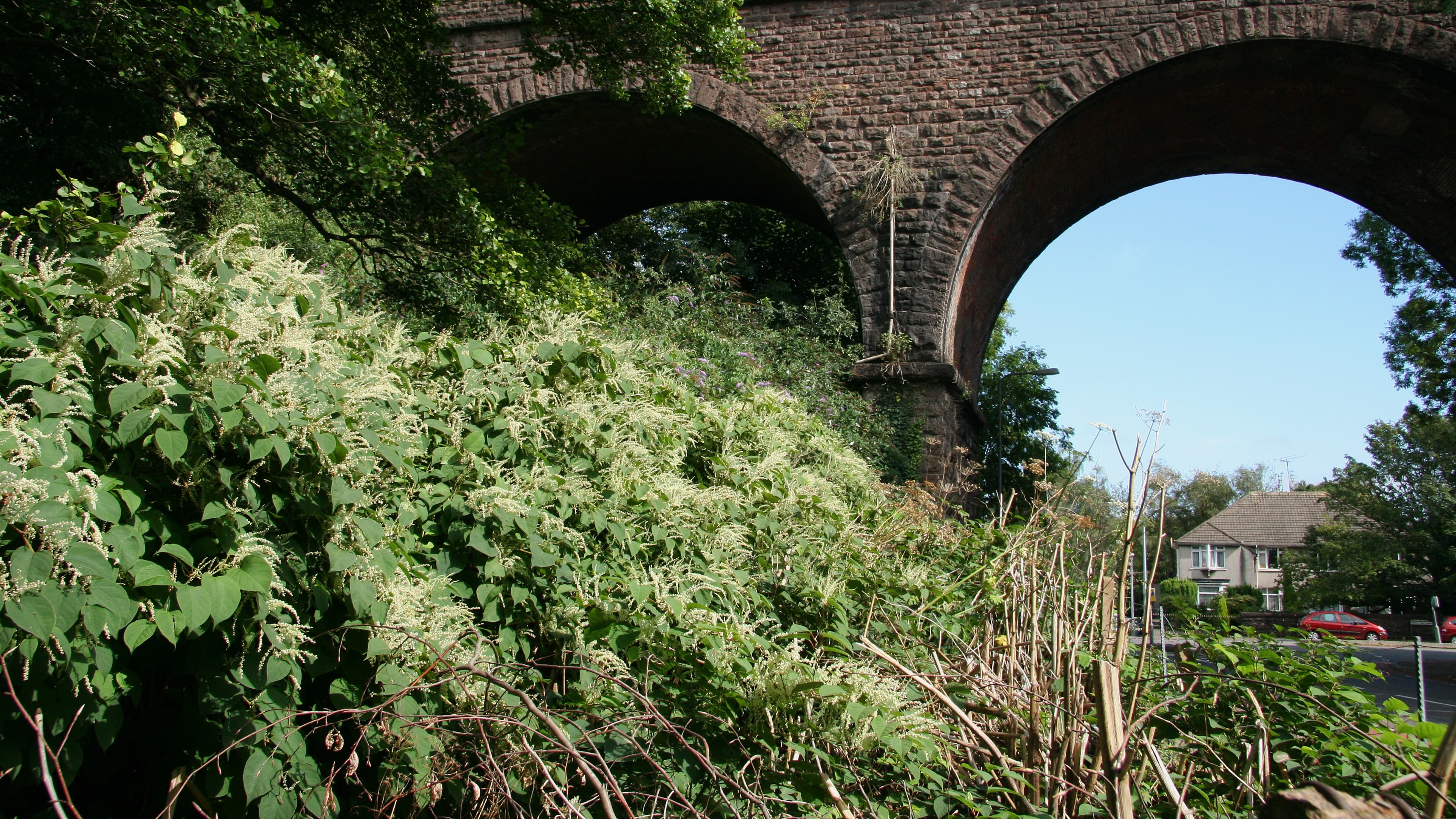
In 2018, the landmark Williams and Waistell legal case against Network Rail Ltd set a new precedent in invasive plant species liability. It established that large landowners have a duty to prevent Japanese Knotweed from spreading onto neighbouring land. At the time, widespread infestations along the 2,700km Wales route caused significant operational, ecological, and public relations challenges for the route operator – Network Rail Cymru Wales.
Brief
Advanced Invasives was commissioned to:
Produce a regional mitigation strategy for Knotweed across the entire Wales Route.
Provide public relations consultancy to support the strategy and manage external stakeholder expectations.
What we did
The team utilised a forensic and academic approach to overhaul the client's management protocols:
Incident audit – analysed 700 Knotweed-related incidents, categorising them into overgrowth (65%), nuisance to neighbours (32%), and trackside safety hazards (4%).
Evidence-based protocols – developed new treatment protocols based on research from Swansea University (Jones et al. 2018).
Comprehensive documentation – produced a central 186-page Treatment Strategy document.
Field deployment tools – created bespoke site working guides for Network Rail staff and contractors to ensure consistent, high-quality decision-making on the ground.
Operational parameters – established clear technical parameters for prioritisation, scheduling, and long-term (multi-year) management workflows.
Communication strategy – delivered public-facing materials that explained the evidence-based approach, reducing the burden on staff to resolve repetitive public enquiries.
Key Outcomes
The project provided Network Rail with a scientifically defensible and operationally efficient framework.
Unrivalled guidance – the guidance remains the most comprehensive Knotweed management plan provided by any infrastructure operator globally.
Internal & external alignment – provided seamless messaging for both internal teams and the public, significantly reducing the costs associated with public disputes.
Sustainability – by moving to an evidence-based model, the strategy ensures that treatments are effective and resource-efficient over the long term, protecting both the railway infrastructure and neighbouring properties.
Legal liabilities and operational risks – workable, evidence-based treatment methods specified served to reduce the risk of legal action and enhanced operational safety by reducing time spent at lineside by maintenance specialists.
Project value
£0
Sectors
Summary
Following the landmark Williams and Waistell ruling, which redefined landowner liability for invasive species, Advanced Invasives developed a comprehensive regional mitigation strategy for Network Rail Cymru Wales to manage Japanese Knotweed across its 2,700km rail network. The project involved a forensic audit of 700 Knotweed-related incidents and the creation of a 186-page, science-led Treatment Strategy based on the Jones et al. (2018) research, alongside operational field guides and a public-facing communication strategy. This framework provided Network Rail with a globally unique, operationally efficient, and scientifically defensible management plan that reduced legal liabilities, enhanced trackside safety, and minimised the costs associated with public disputes through improved internal and external alignment.